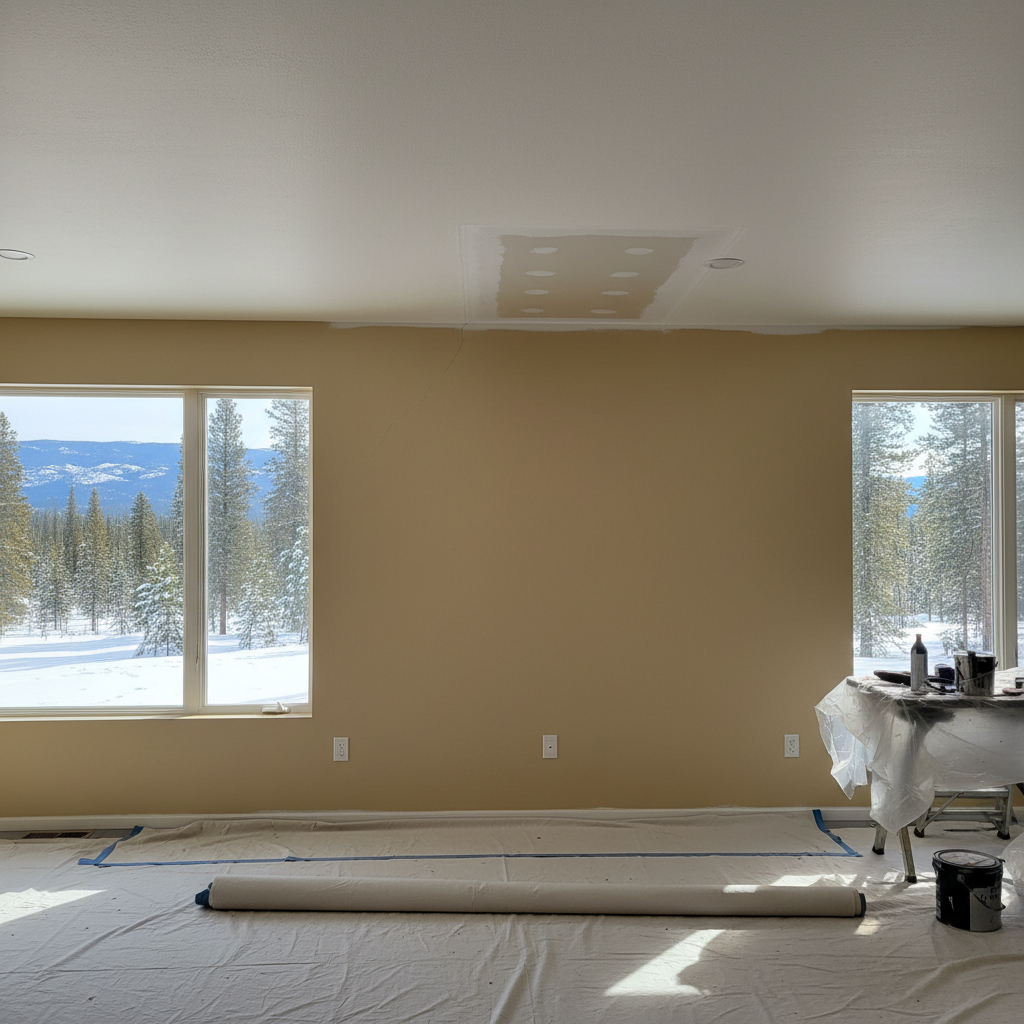
When's the best time to fix that crack in your drywall or finally get that interior painting done? It's a question I get a lot, especially living here in Whitefish. Our weather isn't just a pretty backdrop; it's a major player in how well paint cures and how long your repairs last. You can't just pick any weekend and expect the best outcome.
Understanding Whitefish Weather & Your Walls
Our climate here in the Flathead Valley is unique, right? We've got those long, cold, and often damp winters, then springs that can be wet and unpredictable, followed by beautiful but sometimes smoky summers, and crisp, dry autumns. Each season brings its own set of challenges and opportunities for home maintenance, especially when it comes to your walls.
Think about it: your house breathes. It expands and contracts with temperature and humidity changes. That's why you see those hairline cracks appear in drywall, especially around door frames or where walls meet ceilings. It's not always poor workmanship; sometimes it's just your house adjusting to our wild temperature swings. And if you've got an older home in the Railway District, you know what I'm talking about. Those foundations have seen a lot of seasons.
When to Tackle Drywall Repair
For drywall repair, humidity is the enemy. Or, more accurately, too much humidity. Joint compound, the stuff we use to patch holes and tape seams, needs to dry properly. If the air is too wet, it takes forever to cure, and you risk issues like cracking, shrinking, or even mold if things stay damp for too long. You don't want to rush it.
- Winter: It's tricky. Your furnace is running, which can dry out the air inside, which is good for drying compound. But if you're opening windows for ventilation, you're letting in cold, damp air. You need a consistent, moderate temperature.
- Spring: Often too wet. Those April showers and melting snow mean higher outdoor humidity, which can easily creep indoors. It's not ideal for major repairs.
- Summer: Can be good, but watch for extreme heat or humidity. If it's a really hot day, the compound might dry too fast, which can also lead to cracking. If it's a humid summer, you're back to square one with slow drying.
- Fall: This is often the sweet spot. The air starts to dry out, temperatures are moderate, and you're not usually battling extreme humidity or cold. It's a great time to get those repairs done before winter sets in.
My advice? If you've got minor dings, you can often do them any time of year, as long as you're controlling your indoor climate. For bigger patches or entire room re-taping, aim for fall or a dry spell in late spring/early summer. Just make sure you've got good ventilation and consistent indoor temps.
The Best Time to Paint Indoors
Painting goes hand-in-hand with drywall. Once those repairs are smooth, it's time for color. The same rules about temperature and humidity apply, maybe even more so for paint.
Paint needs to cure, not just dry. Drying is when the water or solvent evaporates. Curing is when the paint hardens and reaches its full durability. This process is heavily influenced by temperature and humidity. Too cold, and it won't cure properly. Too hot, and it might dry too fast, leading to brush marks or poor adhesion. Too humid, and it'll take forever, leaving your walls vulnerable to dust and damage.
- Winter: Surprisingly, winter can be a great time for interior painting. Your heating system keeps the indoor temperature consistent and the air relatively dry. Just make sure you're not opening windows too wide and letting in freezing air, which can shock the paint.
- Spring: This is usually a no-go for exterior painting, but for interiors, it's okay if you can keep your home's humidity in check. If you're running a dehumidifier, even better.
- Summer: Can work, but watch those hot, humid days. If it's 90 degrees and muggy, your paint might flash dry, meaning the surface dries too quickly, trapping solvents underneath. This can lead to bubbling or poor adhesion down the line.
- Fall: Another excellent season for interior work. The air is typically drier, and temperatures are mild, making it perfect for paint to cure slowly and evenly.
For most interior painting, I'd say late fall through early spring is ideal. You've got controlled indoor conditions, and you're not battling the elements outside. Plus, it's a great way to brighten things up when the days are shorter.
Protecting Your Investment Year-Round
You've put in the time and money, whether you did it yourself or hired Whitefish House Painters. Now you want that finish to last, right? Here's how to protect your walls and paint job:
- Control Humidity: This is huge. Invest in a good dehumidifier if your home tends to be damp, especially in basements or bathrooms. Aim for 30-50% relative humidity indoors. This prevents mold and helps your drywall and paint stay stable.
- Ventilate: When cooking or showering, use exhaust fans. Open windows when the outdoor air is dry and mild to circulate fresh air.
- Address Leaks Immediately: A small roof leak or a leaky pipe can quickly ruin drywall and paint. Don't put it off.
- Clean Gently: Most modern paints are washable, but use a soft cloth and mild soap. Harsh chemicals or abrasive scrubbers can damage the finish.
- Touch-Up Smart: Keep a small amount of your original paint for touch-ups. When you do touch up, make sure the area is clean and dry. Don't try to touch up over a dirty wall.
Taking care of your home's interior isn't just about aesthetics; it's about maintaining its structural integrity and value. By understanding how our Whitefish climate affects your walls, you can schedule your projects wisely and keep your home looking its best for years to come.