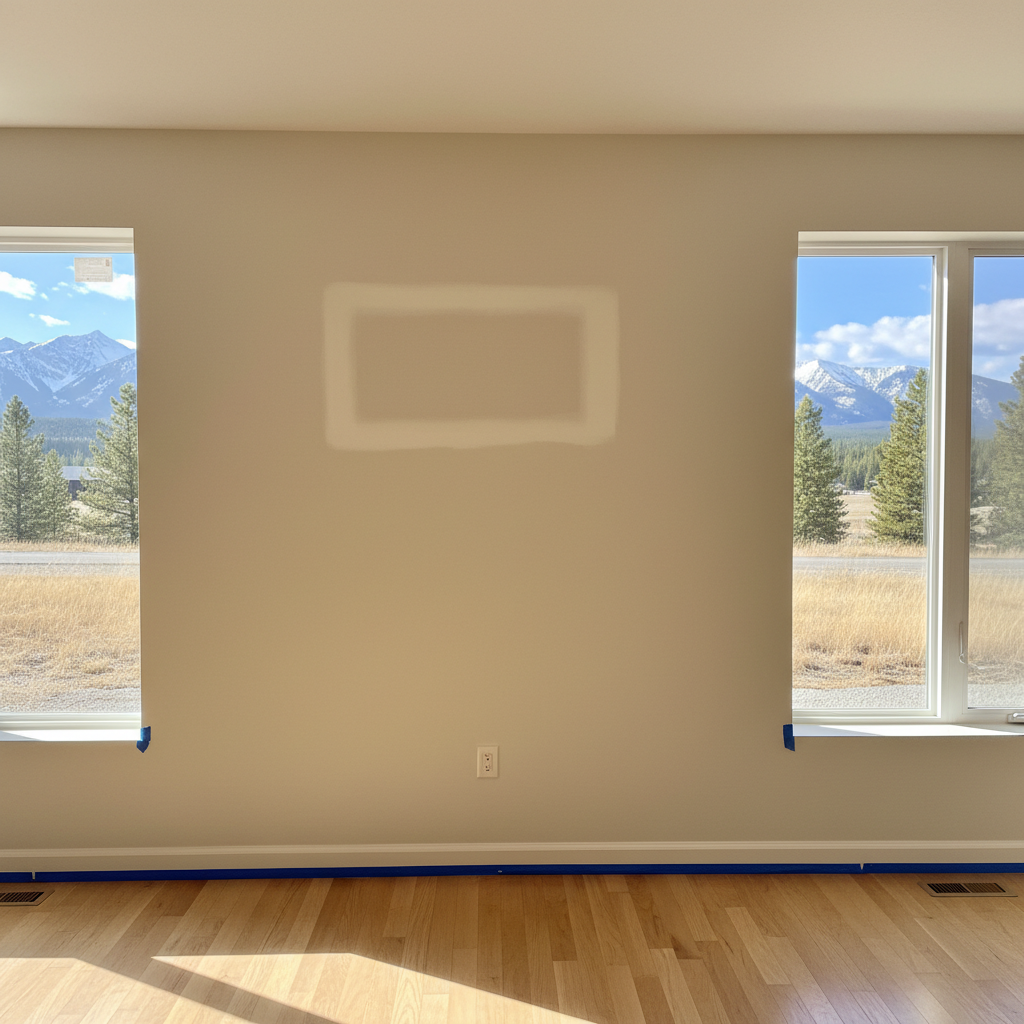
You're ready to fix that ding in the wall or give a room a fresh coat of paint. Good for you! But before you jump in, or worse, hire the wrong person, let's talk about some common mistakes I see folks make right here in Whitefish. Avoiding these can save you a real headache, and a lot of money, down the road.
Mistake #1: Underestimating Drywall Repair
This is a big one. A lot of people think, "Oh, it's just a small hole, how hard can it be?" Well, it can be harder than you think to get it right. Matching textures, getting a perfectly smooth patch, or dealing with water damage that's spread further than you can see – these aren't always DIY friendly. I've walked into homes where someone tried to patch a ceiling crack themselves, and it just looks like a lumpy mess under the paint. Then we have to spend extra time sanding it all down and starting over. It's not just about filling the hole; it's about making it disappear. If you've got anything bigger than a nail pop, or if it's a textured wall, seriously consider calling in someone who knows what they're doing.
Mistake #2: Not Getting Clear on the Scope of Work
You'd be surprised how often this happens. Homeowner says, "I need my living room painted." Contractor says, "Okay, we'll paint your living room." But what does that actually mean? Does it include trim? Ceilings? Doors? What about moving furniture? What about nail holes? Is it just one coat or two? Are we talking about a simple color change or a dramatic shift from dark to light that might need three coats? Always, always get a detailed written estimate. It should spell out exactly what areas are being painted, how many coats, what prep work is included (sanding, patching, priming), and what's not. This isn't just for your protection; it helps the contractor give you an accurate price and ensures everyone's on the same page.
Mistake #3: Choosing a Contractor Based Solely on Price
Look, I get it. We all want a good deal. But when it comes to something as visible and long-lasting as your home's paint job or drywall, the cheapest bid often ends up being the most expensive in the long run. I've seen painters come through Whitefish, do a rush job, use cheap paint, and then disappear. A few months later, the paint is peeling, or the drywall patch is cracking. Quality materials cost more, and skilled labor isn't free. A good contractor will stand behind their work. They'll have proper insurance, a solid reputation, and they won't cut corners. Ask for references, check their reviews, and make sure they're properly licensed and insured. It's not about finding the cheapest; it's about finding the best value.
Mistake #4: Ignoring Proper Surface Preparation
This is probably the biggest difference between a professional job and a DIY disaster, or a bad contractor's work. Paint doesn't stick well to dirty, dusty, or greasy surfaces. Drywall mud won't adhere properly if the old surface isn't prepped right. Here in Whitefish, especially with our long winters and wood stoves, walls can get pretty grimy. Skipping the cleaning, sanding, patching, and priming steps is like building a house on a shaky foundation. It might look okay for a minute, but it won't last. A good painter will spend more time on prep than on actually applying paint. They'll wash walls, fill holes, sand smooth, tape properly, and prime any bare spots or significant color changes. If a contractor breezes through the prep talk, that's a red flag.
Mistake #5: Not Considering Whitefish's Unique Conditions
Our climate here in Whitefish isn't like everywhere else. We get big temperature swings, high humidity, and plenty of moisture, especially near the lake. This affects how paint cures and how drywall reacts. For instance, if you're painting a bathroom, you absolutely need a paint designed for high-moisture areas to prevent mildew. For exterior work, you need paint that can stand up to our harsh winters and hot summers. Indoor humidity can also affect drywall drying times. A local contractor, like us at Whitefish House Painters, understands these nuances. We know what products perform best in our specific environment, and we factor that into our recommendations and processes. Someone from out of the area might not even think about it, and you'll pay the price later.
So, there you have it. Don't fall into these traps. Do your homework, ask the right questions, and don't be afraid to invest in quality. Your home is worth it.