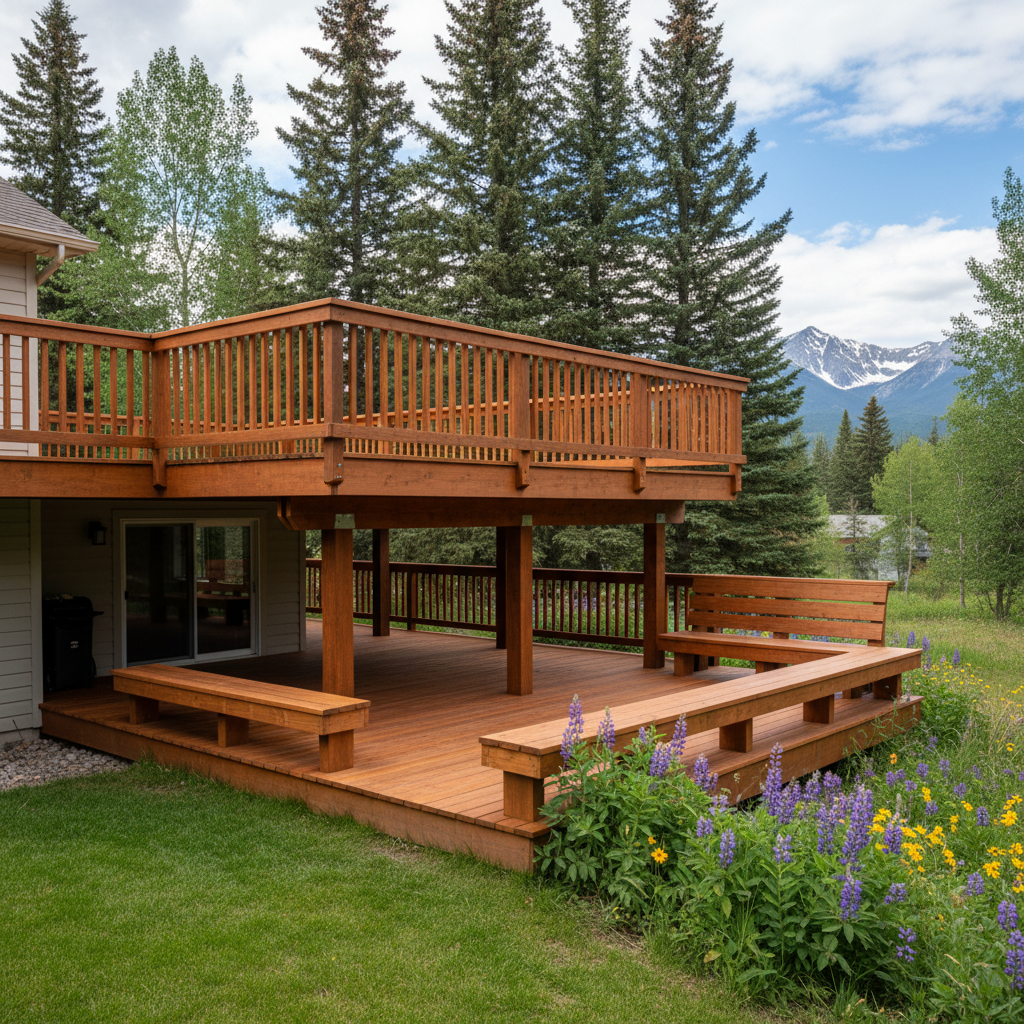
So, you're looking at your deck and thinking it's time for a fresh coat of stain. Good call. A well-maintained deck not only looks great but also lasts a whole lot longer, which is important up here where our winters can be brutal. But before you jump in, let's talk about how to plan this out so it goes smoothly.
When to Plan Your Deck Staining Project
Timing is everything, especially in Whitefish. You're generally looking at a window from late spring through early fall. I'm talking late May, once the last of the consistent rain has passed, right up until about mid-September before the overnight temps really start to dip. You need a stretch of dry weather, usually a few days before and a few days after the application, for the stain to cure properly. Don't try to rush it in April or October; you'll just be asking for trouble with moisture and cold.
If you're hiring a pro, start calling around in late winter or early spring. Good contractors, like us at Whitefish House Painters, book up fast once the weather breaks. You don't want to be scrambling in July when everyone else is already on their schedule.
What to Expect During the Process
Alright, so you've picked your stain and found your contractor. What happens next? First up is cleaning. This isn't just a quick hose-down. We're talking about a thorough power wash to remove all the old dirt, mildew, and loose stain. This step is crucial. If you don't get the surface clean, the new stain won't adhere properly, and you'll be doing it again sooner than you want.
After cleaning, there's a drying period. This can take a couple of days, depending on the humidity and sun. Don't rush this either; damp wood means a poor finish. Then comes any necessary sanding or repairs. Loose boards, splinters, or rough spots need to be addressed before any stain goes down.
Finally, the staining itself. This usually involves one or two coats, applied evenly. We'll protect your house siding, landscaping, and anything else nearby from overspray or drips. Once the stain is on, it needs time to cure. You'll want to stay off the deck for at least 24-48 hours, sometimes longer depending on the product and weather. I've seen folks try to have a BBQ too soon and end up with footprints in their fresh stain – not ideal.
How to Prepare Your Deck and Yard
You can do a lot to make the job easier and quicker, whether you're doing it yourself or hiring us. First, clear everything off the deck. I mean everything: furniture, planters, grills, toys, even that old bird feeder. Move it all at least 10-15 feet away from the deck, or further if it's going to be power washed.
Next, trim back any bushes or plants that are right up against the deck. Give us some space to work. If you have delicate plants nearby, you might want to cover them with a tarp or plastic sheeting. Make sure all windows and doors leading to the deck are closed tightly. If you have any outdoor outlets or light fixtures on the deck, let your contractor know so they can be properly protected.
Also, secure any pets. We use equipment that can be loud, and chemicals that aren't good for curious noses. Keep your furry friends inside or in a secure area away from the work zone.
Questions to Ask Before Signing a Contract
Don't just go with the first quote you get. Ask some smart questions. It'll save you headaches later.
- What kind of stain do you recommend for my deck? There are different types – transparent, semi-transparent, solid. They all offer different looks and levels of protection. For our climate, especially if your deck gets a lot of sun exposure like those up on Big Mountain, a good quality semi-transparent or solid stain often holds up best against UV and moisture.
- What's your process for surface preparation? Make sure they're not just going to slap stain over old, dirty wood. Cleaning, drying, and light sanding are key.
- How many coats will you apply? Usually, two thin coats are better than one thick one.
- What's your warranty on the work? A reputable contractor will stand behind their work.
- Are you licensed and insured? This is non-negotiable. You don't want to be liable if someone gets hurt on your property.
- Can you provide references? Talk to other homeowners they've worked for. See their work firsthand if you can.
- What's the estimated timeline? From start to finish, including drying times.
- What's included in the price? Make sure there are no hidden fees for things like cleaning or material disposal.
Getting your deck stained is a great way to protect your investment and boost your home's curb appeal. Take the time to plan it right, ask the tough questions, and you'll enjoy that beautiful deck for years to come.